

Choosing the right ceramic fiber blanket is essential for achieving efficient thermal insulation, reducing energy consumption, and controlling industrial operating costs. However, different applications require different temperature grades, densities, and thicknesses. Selecting an unsuitable ceramic insulation blanket may lead to poor insulation performance, excessive material costs, or premature material deterioration.
Ceramic fiber insulation is widely used in industrial furnaces, kilns, boilers, petrochemical equipment, and high-temperature pipelines. In this guide, Mindelun explains how to choose a suitable ceramic fiber blanket based on operating temperature, density, thickness, and application requirements.
As an experienced ceramic fiber blanket manufacturer and supplier, Mindelun provides various high-temperature insulation materials for industrial customers, distributors, and contractors worldwide.
A ceramic fiber blanket is a lightweight and flexible thermal insulation material manufactured from alumina-silica fibers. It is produced through spinning or blowing processes and reinforced by mechanical needling to create a uniform fiber structure.
Compared with traditional refractory bricks and rigid insulation materials, ceramic fiber blankets offer several advantages:
High-temperature resistance: Suitable for different industrial heating applications.
Low thermal conductivity: Helps reduce heat transfer and energy consumption.
Lightweight structure: Reduces the overall weight of furnace linings.
Thermal shock resistance: Performs well under repeated heating and cooling cycles.
Flexibility: Easy to cut, wrap, and install around irregular surfaces.
Easy maintenance: Damaged insulation sections can be repaired or replaced conveniently.
These properties make ceramic insulation blankets an effective solution for industrial thermal management.
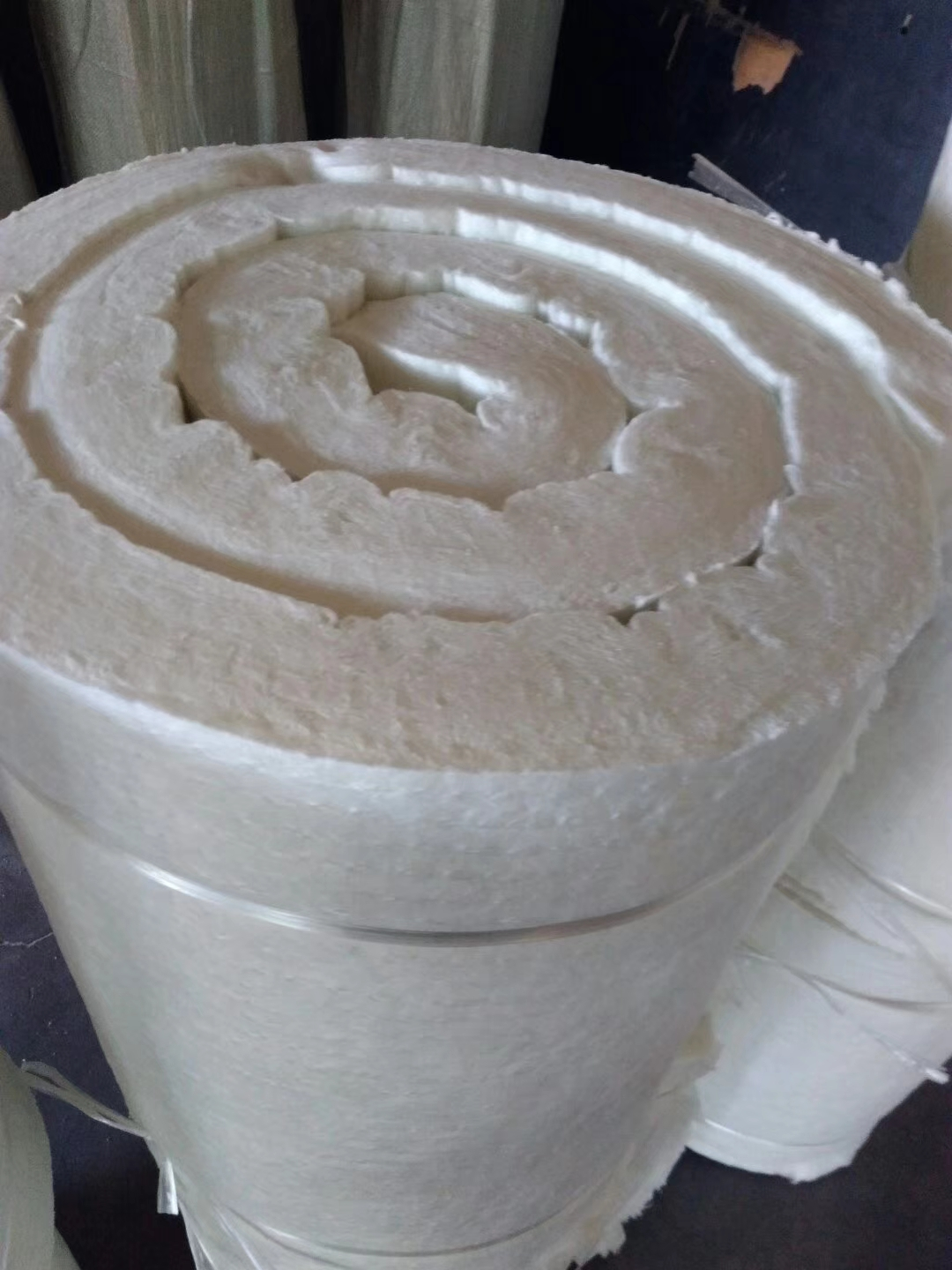
Operating temperature is the first factor to consider when selecting a high-temperature ceramic fiber blanket.
Different ceramic fiber grades are designed for different temperature requirements. Buyers should distinguish between classification temperature and recommended continuous working temperature. These two values are not interchangeable.
| Product Grade | Classification Temperature | Typical Working Temperature |
|---|---|---|
| Common (COM) | 1050°C | 800°C |
| Standard (ST) | 1260°C | 1050°C |
| High Purity (HP) | 1260°C | 1100°C |
| High Alumina (HA) | 1360°C | 1150°C |
| Zirconia-Alumina (ZA) | 1400°C | 1200°C |
| Zirconia (HZ) | 1450°C | 1350°C |
Note: These are reference specifications for corresponding Mindelun product grades. Actual service temperature depends on chemical composition, atmosphere, temperature fluctuations, and operating conditions. Please confirm the selected grade's technical data sheet before purchasing.
For example:
Around 800°C: Common-grade ceramic fiber blanket may be suitable.
Around 1000°C: Standard or high-purity ceramic fiber blanket can be considered.
Above 1100°C: High-alumina or zirconia-containing grades may be required, depending on the actual conditions.
Choosing the correct temperature grade helps maintain insulation performance without unnecessarily increasing material costs.
Density affects the weight, handling strength, and structure of ceramic fiber blanket insulation.
Common density options include 64, 96, 128, and 160 kg/m³.
| Density | Main Characteristics | Typical Applications |
|---|---|---|
| 64 kg/m³ | Lightweight structure | Selected low-load insulation systems |
| 96 kg/m³ | Balanced weight and handling properties | General industrial insulation |
| 128 kg/m³ | Higher mass per unit volume and good handling strength | Furnace linings and industrial equipment |
| 160 kg/m³ | Higher density and material mass | Selected demanding insulation systems |
For most general industrial applications, 96 kg/m³ and 128 kg/m³ ceramic fiber blankets are common choices.
However, higher density does not automatically mean better thermal insulation. Buyers should compare thermal conductivity at the same mean temperature and consider installation conditions, dimensional stability, and mechanical requirements.
Thickness directly affects the thermal resistance of a ceramic fiber insulation system and the space required for installation.
Common ceramic fiber blanket thicknesses include:
12.5 mm
20 mm
25 mm
38 mm
50 mm
For general equipment insulation, 25 mm and 50 mm are widely used options. Thinner blankets may be suitable for applications with limited installation space, while thicker or multilayer insulation systems can be used when greater thermal resistance is required.
The final thickness should be determined according to operating temperature, heat loss calculations, allowable surface temperature, and available installation space.
Different industrial environments require different insulation solutions. Understanding the actual application helps buyers select the appropriate ceramic blanket.
Ceramic fiber blankets are commonly used for furnace walls, roofs, doors, and backup insulation layers. Their lightweight structure helps reduce furnace heat storage and improve heating efficiency.
For these applications, buyers should focus on temperature grade, density, thickness, and fixing methods.
Learn more about our Industrial Furnace Insulation Solutions.

Ceramic insulation blankets are used for heaters, reactors, pipelines, and other high-temperature equipment in petrochemical facilities.
Their flexibility allows them to fit around curved surfaces and irregular equipment. For outdoor installations, suitable weatherproof protective systems should also be considered.

Ceramic fiber insulation is suitable for boiler walls, ducts, exhaust systems, and other high-temperature components. The selection should consider temperature, vibration, gas velocity, and mechanical protection requirements.
In steel plants and metallurgical facilities, high-temperature ceramic fiber blankets are used in heat treatment furnaces, annealing furnaces, and other thermal processing equipment.
Applications involving demanding temperatures or thermal cycles may require high-purity, high-alumina, or zirconia-containing fiber grades.
Flexible ceramic fiber blanket strips can be used for selected furnace door seals, expansion joints, and irregular insulation structures.
Customized cutting and slicing can make installation easier and help fill insulation gaps.
When comparing ceramic fiber blanket manufacturers, buyers should look beyond temperature ratings and density.
Two important technical indicators are thermal conductivity and linear shrinkage.
Thermal Conductivity
Thermal conductivity measures how easily heat passes through an insulation material. Lower thermal conductivity generally indicates better insulation performance under comparable test conditions.
When comparing products, check thermal conductivity at different mean temperatures and make sure the test conditions are consistent.
Linear Shrinkage
Linear shrinkage refers to the dimensional change of ceramic fiber materials after exposure to specified high temperatures for a certain period.
Lower shrinkage is generally desirable for maintaining the integrity of high-temperature insulation systems.
Buyers should request technical data sheets and compare shrinkage values under the same testing temperature and duration.
The following examples provide a preliminary reference for common industrial applications.
| Application | Working Temperature | Suggested Grade | Suggested Density |
|---|---|---|---|
| General equipment insulation | Around 800°C | Common | 96–128 kg/m³ |
| Industrial furnace lining | Around 1000°C | Standard / High Purity | 128 kg/m³ |
| High-temperature furnace | Above 1100°C | High Alumina / Zirconia-containing | 128–160 kg/m³ |
Thickness should be determined separately according to heat loss calculations and installation requirements.
These are preliminary selection recommendations, not universal specifications. The final material should be confirmed based on actual working conditions and the manufacturer's technical data.
Mindelun specializes in manufacturing and supplying ceramic fiber insulation materials for global industrial customers.
We provide different temperature grades, densities, thicknesses, and customized dimensions to meet various industrial requirements.
Our Advantages:
Multiple Temperature Grades: Products with classification temperatures ranging from 1050°C to 1450°C.
Flexible Density Options: 64, 96, 128, and 160 kg/m³.
Customized Specifications: Different thicknesses, widths, lengths, and special shapes.
Quality Control: Production and inspection procedures to maintain consistent product specifications.
OEM & ODM Services: Customized packaging, private labeling, and product specifications.
Factory-Direct Supply: Competitive prices for distributors, wholesalers, contractors, and industrial end users.
Export Packaging: Flexible packaging and shipping arrangements for international orders.
Explore our Ceramic Fiber Blanket Products for more specifications and product information.
We also supply complementary insulation materials, including ceramic fiber board and ceramic fiber paper, for different industrial applications.
Whether you need ceramic fiber blanket for furnace lining, pipeline insulation, or high-temperature equipment, Mindelun can provide suitable ceramic insulation solutions according to your project requirements.
Common densities include 64, 96, 128, and 160 kg/m³. For general industrial insulation, 96 and 128 kg/m³ are frequently selected. The final choice depends on operating conditions and insulation design.
Classification temperature is a laboratory-based temperature rating under specified testing conditions. Working temperature refers to the recommended service temperature under defined operating conditions. The two values should not be treated as interchangeable.
Not necessarily. A 1260°C classification-grade blanket does not automatically guarantee continuous operation at 1260°C. The actual service temperature depends on its specific grade and working environment.
Yes. Ceramic fiber blankets are widely used in furnace walls, roofs, doors, and backup insulation because of their lightweight structure, flexibility, and low thermal conductivity.
Yes. Manufacturers can supply different temperature grades, densities, thicknesses, widths, lengths, and packaging options. OEM and private-label services can also be arranged according to customer requirements.
Consider production capabilities, technical specifications, quality control, product consistency, customization services, and export experience. Requesting technical data sheets and samples before placing a bulk order is also recommended.
Choosing a suitable ceramic fiber blanket requires careful consideration of operating temperature, fiber grade, density, thickness, thermal conductivity, shrinkage, and installation environment.
The right ceramic insulation blanket can help reduce heat loss, improve equipment efficiency, and optimize long-term operating costs.
As a professional ceramic fiber blanket manufacturer and supplier, Mindelun is committed to providing reliable high-temperature ceramic fiber insulation materials and customized solutions for global distributors, contractors, and industrial customers.
Contact Mindelun today with your operating temperature, required density, thickness, and application details. Our team will help you find a suitable ceramic fiber insulation solution for your project.
Inquire immediately
company Qingdao Mindelun New Materials Co.,ltd.
address No. 290-7, Kangcheng Road, Chengyang District, Qingdao, China 266109.
whatsapp 86-13070879060
E-Mail: admin@mindelunmaterials.com

How to Choose a Suitable Ceramic Fiber Blanket for Your Application
2026-11-12
What Are the Limitations of Calcium Silicate Insulation and How Can You Avoid Them?
2026-11-02
Ceramic Fiber Board vs. Fireproof Board: How to Choose the Right Material for Industrial Furnaces?
2026-10-27
Ceramic Fiber Bulk for Kiln | Supplier & Manufacturer
2026-10-21
Ceramic Fiber Paper with Aluminum Foil: Single-Sided and Double-Sided Options
2026-10-10
Copyright © 2024 Qingdao Mindelun New Materials Co., Ltd. All Rights Reserved.
 Powered by Hicheng